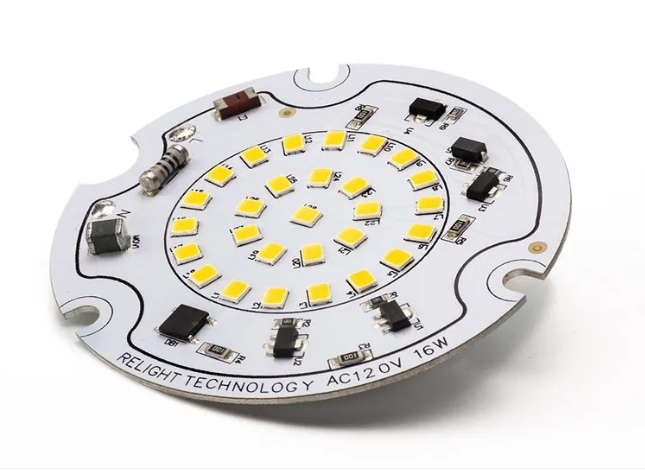
For architectural lighting projects demanding precision, durability, and optimal thermal performance, EBest is your top source for LED outline light aluminum PCB. Our core specifications include thermal conductivity of 2.0 W/m·K, IP65-rated waterproof design, and ultra-thin profiles down to 0.8mm. We deliver custom sizes, flexible shapes, and fast turnarounds to match your architectural outline requirements. Place your order with EBest today for reliable, high-quality LED outline light aluminum PCB that elevates your building’s exterior lighting.
Why Choose EBest for LED Outline Light Aluminum PCB?
Below are reasons why choose EBest for LED outline light aluminum PCB:
- Superior Quality: Industrial-grade 6061 aluminum alloy, high-thermal insulation layers, and strict thermal cycling testing ensure long-term outdoor stability.
- Reliable Lead Times: Mass production capacity with 7–10 day standard lead times and 3–5 day expedited services for urgent projects.
- End-to-End Service: Free DFM analysis, custom profile design, and dedicated technical support for architectural lighting integration.
- Stable Supply Chain: ISO-certified manufacturing with consistent material sourcing to support large-scale architectural projects.
- Certified Standards: Full compliance with IPC-A-600, UL, and RoHS for global architectural applications.
Our Certifications & Quality Standards for LED Outline Light Aluminum PCB
| Certificate | Standard | Scope of Application |
| ISO 9001:2015 | Quality Management | Consistent production & process control |
| IPC-A-600 | PCB Acceptability | Visual & performance criteria |
| UL 94 V-0 | Flammability | Safety for outdoor electrical use |
| RoHS 2.0 | Environmental | Hazardous substance compliance |
| REACH | Chemical Regulation | EU market material compliance |
| IP65 Test Report | Ingress Protection | Dust-tight & water-resistant design |
What Thermal Challenges Do Architectural LED Outline Lights Face?
Common Challenges in LED Outline Lighting Projects
- Uneven Heat: Compact size traps heat; LED junction temp >110℃ causes fast light decay.
- Short Lifespan: Poor thermal design cuts life by 50–70%, high maintenance costs.
- Dim/Uneven Light: Thermal stress degrades chips; uneven brightness across outlines.
- Size vs. Heat: Slim PCB for contours lacks thermal mass; overheats quickly.
- Outdoor Durability: Moisture, UV, and temperature cycles degrade performance.
- Supply Instability: Large projects suffer delays, inconsistent batch quality.
Our Solutions to These Challenges of LED Outline Lighting Projects
- Superior Heat Dissipation: Aluminum base spreads heat 900x faster than FR-4.
- Low Thermal Resistance: Keeps junction temp <70℃, extending lifespan 3–5x.
- Uniform Thermal Distribution: Minimizes hotspots; stable brightness for years.
- Slim & Thermally Efficient: Thin profiles with high conductivity for tight contours.
- Weatherproof Construction: IP67, anti-UV, anti-corrosion for harsh outdoor use.
- Stable Mass Production: Consistent quality, on-time delivery for large-scale projects.
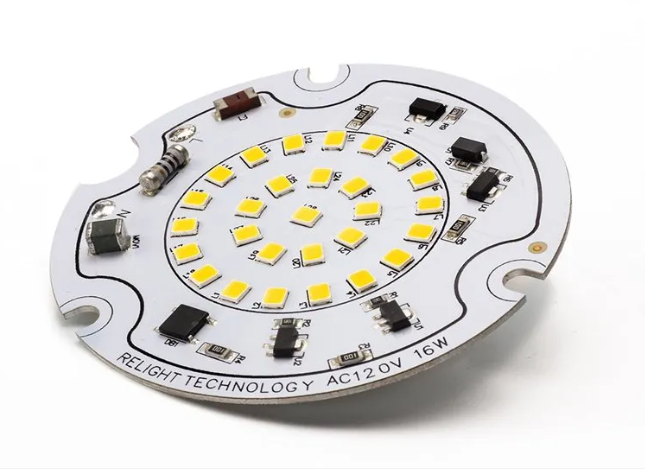
How Does LED Outline Light Aluminum PCB Improve Thermal Performance?
Here are methods for enhancing the heat dissipation performance of aluminum-based PCBs for LED contour lights:
- Boasts ultra-high thermal conductivity: The 6061/5052 aluminum base offers 180–200 W/(m·K) conductivity, which is 900x higher than standard FR-4 PCBs (0.2 W/(m·K)), ensuring rapid heat transfer away from LED chips.
- Features low thermal resistance (0.8–1.5 ℃/W): This minimizes heat buildup at the LED junction, preventing overheating that leads to light decay and component failure.
- Utilizes the full aluminum surface as a passive heat sink: Unlike FR-4 PCBs, the aluminum base spreads heat evenly across the entire board, eliminating hotspots that degrade LED performance.
- Matches CTE (Coefficient of Thermal Expansion) with LED chips: This reduces thermal stress on solder joints and components, preventing cracks and ensuring long-term reliability in temperature-fluctuating outdoor environments.
- Optimizes copper layout for vertical heat flow: Thermal vias (0.3 mm) and wide copper paths (2–3 oz) enhance heat transfer from the LED pad to the aluminum base, further improving thermal efficiency.
- Delivers measurable temperature reduction: Lowers LED junction temperature by 40–50℃ compared to FR-4 PCBs, keeping LEDs within their ideal operating range (<70℃).
- Extends LED lifespan significantly: By controlling heat, the LED Outline Light Aluminum PCB extends LED service life by 3–5x, with light decay kept below 5% at 5,000 hours.
- Ensures consistent brightness: Even thermal distribution across the board eliminates uneven light output, critical for architectural outline lighting that requires uniform illumination.
How to Select the Right LED Outline Light Aluminum PCB for Your Project?
Below is a selection guide to LED outline light aluminum PCB for your project:
- Choose dielectric conductivity based on power density: For low-power indoor outlines (<12 W/m), select 1.0 W/(m·K) dielectric; for standard outdoor (12–24 W/m), choose 2.0 W/(m·K); for high-power facade lighting (>24 W/m), opt for 3.0 W/(m·K) to ensure efficient heat transfer.
- Determine PCB thickness according to outline complexity: Slim 0.8–1.0 mm thickness is suitable for complex curved or sharp contours, while 1.2–1.5 mm is standard for most outdoor applications, and 1.5–2.0 mm is ideal for high-power dense outlines.
- Select copper foil thickness based on outline length: For outlines shorter than 5m, 1 oz copper foil is sufficient; for lengths 5–10m, use 2 oz copper; for runs longer than 10m, choose 3 oz copper to minimize voltage drop (≤5% voltage loss is recommended).
- Match waterproof grade to the installation environment: Outdoor projects require IP65–IP67 waterproof rating (compliant with IEC 60529 standard) to resist moisture and dust, while indoor projects can use standard non-waterproof PCBs to reduce cost.
- Choose flexible or rigid PCB based on mounting method: Flexible aluminum PCBs are suitable for irregular contours (e.g., curved building corners) with a bending radius of ≥5mm, while rigid PCBs work for straight outlines (e.g., building edges) for better structural stability.
- Prioritize aluminum base material with high thermal conductivity: Select 6061 or 5052 aluminum alloy with 180–200 W/(m·K) thermal conductivity, which is 900x higher than FR-4 PCBs, to avoid LED junction overheating.
- Ensure thermal resistance meets project needs: The PCB’s thermal resistance should be 0.8–1.5 ℃/W; this ensures LED junction temperature stays below 70℃, reducing light decay to <5% at 5,000 hours.
- Consider CTE matching for temperature-fluctuating environments: Choose PCBs with CTE (Coefficient of Thermal Expansion) matching LED chips (6–8 ppm/℃), which reduces solder joint stress and prevents component failure in outdoor temperature cycles (-40℃ to 85℃).
- Verify voltage withstand capacity: For outdoor or high-voltage applications, select PCBs with 2,000–4,500 VAC voltage withstand to ensure safe operation and avoid electrical breakdown.
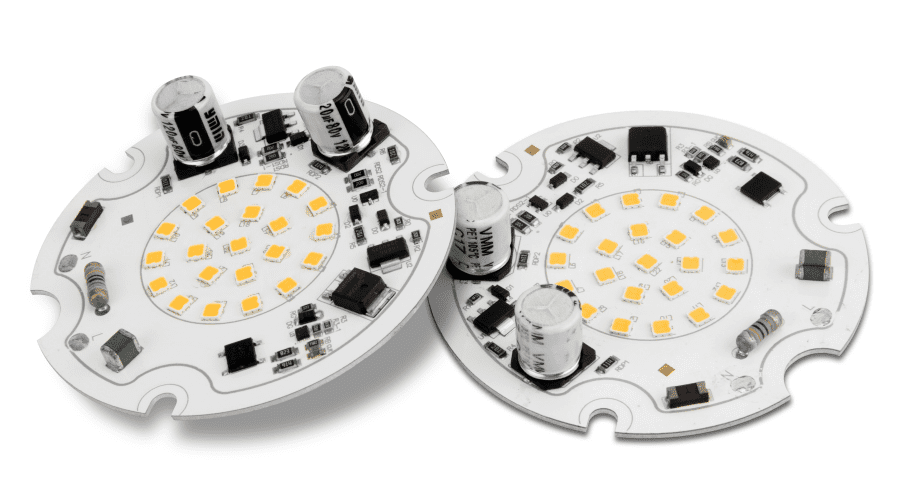
What Are the Design Best Practices for LED Outline Light Aluminum PCB?
The best practices for designing aluminum-based PCBs for LED contour lights are as follows:
- Optimize LED spacing: Keep LEDs 10–15 mm apart to avoid thermal coupling, which prevents localized overheating and ensures uniform heat distribution across the entire outline.
- Enhance copper layout: Use 3x the pad area under each LED and maintain ≥85% copper fill; for pads on large copper pour areas, adopt “thermal relief” (daisy-shaped) pads to prevent cold solder joints.
- Design proper thermal vias: Use 0.3 mm thermal vias with a 1 mm pitch under high-power components to facilitate vertical heat transfer from the LED pad to the aluminum base, improving thermal efficiency.
- Separate heat sources: Place LED drivers away from LED strips and other heat-generating components to avoid heat accumulation, which helps maintain a stable operating temperature for all parts.
- Match PCB contour to building design: Customize the PCB shape to fit the building’s outline, and avoid tight bends near LEDs, ensure a minimum bending radius of ≥5mm to prevent damage to the dielectric layer.
- Control voltage drop: Use 24V power supply for outline lengths over 5m, and adopt dual-end power supply for runs longer than 10m to keep voltage loss ≤5% and ensure consistent brightness.
- Strengthen waterproof design: Apply full edge sealing to the PCB and use IP67-rated connectors for outdoor applications, preventing moisture intrusion that can cause short circuits and component failure.
- Ensure proper mounting compatibility: Design the PCB to work with thermal adhesive (1–3 W/(m·K)) or mounting clips, ensuring good thermal contact between the PCB and the mounting surface for efficient heat dissipation.
- Account for thermal expansion: Allow 0.5–1% thermal movement in long PCB runs to accommodate temperature fluctuations (-40℃ to 85℃), preventing warping or damage over time.
- Follow pad design standards: Ensure LED pads have a minimum single-side dimension of no less than 0.25 mm, and maintain a spacing of over 0.4 mm between adjacent pad edges to avoid solder bridging.
LED Outline Light Aluminum PCB vs. FR-4: Which Is Better?
| Parameter | LED Outline Light Aluminum PCB | Standard FR-4 PCB |
| Thermal Conductivity | 180–200 W/(m·K) | 0.2 W/(m·K) |
| Thermal Resistance | 0.8–1.5 °C/W | 10–20 °C/W |
| LED Junction Temperature | <70°C | >110°C |
| Lifespan | 50,000+ hours | 10,000–20,000 hours |
| Light Decay | <5% at 5,000 hours | 20–40% at 2,000 hours |
| Outline Flexibility | Slim, bendable | Bulky, limited |
| Outdoor Durability | IP67, weatherproof | Poor, short life |
| Architectural Fit | Perfect contour matching | Limited shaping |
What Are the Top 4 Industry Applications for LED Outline Light Aluminum PCB?
1. Building Facade & Architectural Lighting
- Use: Outline windows, roofs, corners, and decorative structures.
- Benefits: Even heat, stable brightness, long life; withstands weather.
- Case: 50,000m² commercial facade—3+ years maintenance-free.
2. Landscape & Outdoor Architectural Lighting
- Use: Paths, bridges, sculptures, pool edges.
- Benefits: IP67 waterproof, UV-resistant, temperature-stable.
- Case: Urban park landscape, 50% lower maintenance vs. standard PCBs.
3. Commercial Signage & Channel Letters
- Use: LED outlines for signs, logos, channel letters.
- Benefits: Slim profile, even light, long life, low power.
- Case: Retail sign network, 70% fewer failures in 2 years.
4. Automotive & Transportation Outline Lighting
- Use: Vehicle contours, interior/exterior trim, traffic structures.
- Benefits: Vibration-resistant, thermal-stable, compact.
- Case: Commercial vehicle lighting—4x longer service life.
How Does LED Outline Light Aluminum PCBs Extend Service Life?
LED outline light aluminum PCBs extends service life through comprehensive thermal control, environmental protection, and material optimization, addressing the core factors that cause LED outline light failure, ensuring long-term stable operation and reducing maintenance costs. Its multi-faceted design works together to prolong lifespan 3–5x compared to standard FR-4 PCBs.
- Controls LED junction temperature within the ideal range: Maintains LED junction temperature below 70℃ (the optimal operating temperature for LEDs) by leveraging the aluminum base’s high thermal conductivity (180–200 W/(m·K)), preventing overheating that accelerates component aging and failure.
- Minimizes thermal stress on components: Matches the CTE (Coefficient of Thermal Expansion) of LED chips (6–8 ppm/℃), reducing fatigue and cracks in solder joints and the dielectric layer caused by temperature fluctuations (-40℃ to 85℃) in outdoor environments.
- Slows down LED light decay significantly: Keeps light decay below 5% at 5,000 hours of continuous use and maintains 80% brightness at 50,000 hours, far outperforming FR-4 PCBs (20–40% light decay at 2,000 hours).
- Provides robust outdoor environmental protection: Features IP65–IP67 waterproofing, anti-UV coating, and corrosion-resistant materials, effectively resisting moisture, dust, and UV radiation that degrade PCB performance and shorten service life.
- Ensures high material stability: Adopts high-quality 6061/5052 aluminum alloy and ceramic-filled epoxy dielectric layer, which resist material degradation and warping even under long-term use and harsh environmental conditions.
- Reduces voltage-related damage: Optimized 1–3 oz copper layout minimizes voltage drop (≤5% for long runs), avoiding overcurrent or voltage instability that can damage LEDs and shorten their lifespan.
- Eliminates thermal hotspots: Uniform heat distribution across the aluminum base prevents localized overheating, which is a major cause of premature LED failure in outline lighting systems.
- Enhances structural durability: The rigid yet flexible aluminum base design resists vibration and physical damage, ensuring the PCB maintains its integrity and performance over years of use, especially in architectural and outdoor applications.
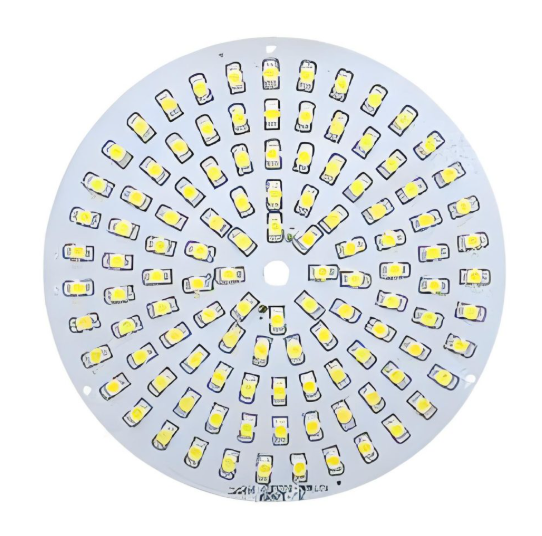
How to Ensure Reliable Installation of LED Outline Light Aluminum PCB?
Reliable installation of LED outline light aluminum PCB is crucial to its thermal performance, lifespan and stability, especially for outdoor architectural use. Proper installation ensures good thermal contact, prevents moisture intrusion and structural damage, and impacts the lighting system’s performance and maintenance costs. Below is a step-by-step guide for correct installation.
- Prepare the mounting surface: Ensure the mounting surface is clean, flat, and thermally conductive. Remove any dust, oil, or debris using a lint-free cloth and alcohol, as contaminants can reduce thermal contact and lead to hotspots. For uneven surfaces, use a leveling compound to create a smooth base.
- Apply thermal interface material: Use a high-quality thermal adhesive (1–3 W/(m·K)) or thermal pad between the aluminum PCB and the mounting surface. Apply a uniform layer (0.1–0.3 mm thick) to fill gaps, ensuring maximum heat transfer from the PCB to the mounting structure.
- Position and fix the PCB: Align the PCB with the building’s outline, ensuring it fits tightly without tension. Fix the PCB using mounting clips or by pressing it firmly onto the thermal adhesive, with a fixing spacing of 15–20 cm. Avoid tight bending near LEDs, maintain a minimum bending radius of ≥5mm to prevent damage to the dielectric layer.
- Wire the PCB correctly: Use a 24V power supply for outline lengths over 5m to minimize voltage drop; for runs longer than 10m, adopt dual-end power supply to ensure consistent brightness (voltage loss ≤5%). Use waterproof connectors for outdoor applications and ensure wiring is secured to avoid tension on solder joints.
- Seal the PCB for outdoor use: Apply full edge sealing using waterproof silicone sealant to the PCB edges, covering all gaps and exposed areas. Use IP67-rated connectors to prevent moisture and dust intrusion, which can cause short circuits and component failure.
- Leave expansion gaps: Allow a 3–5 mm expansion gap per 10m of PCB length to accommodate thermal expansion and contraction (-40℃ to 85℃), preventing warping, cracking, or detachment from the mounting surface over time.
- Test before final installation: After wiring and sealing, conduct a power test to check for uneven brightness, overheating, or electrical issues. Use an infrared thermometer to verify that the LED junction temperature stays below 70℃ during operation, ensuring the installation meets thermal performance requirements.
FAQs About LED Outline Light Aluminum PCB
Q1: What thickness is best for LED outline light aluminum PCB?
A1: Standard: 1.2–1.5 mm for most outdoor applications; Slim Contours: 0.8–1.0 mm for complex curves; High-Power: 1.5–2.0 mm for dense, high-power outlines.
Q2: Can LED outline light aluminum PCB be used outdoors?
A2: Yes, our boards feature IP65–IP67 waterproofing, anti-UV coating, and corrosion-resistant materials, making them ideal for long-term outdoor architectural use.
Q3: What is the typical lifespan of LED outline light aluminum PCB?
A3: 50,000–70,000 hours (5–8 years) of continuous use, with light decay <5% at 5,000 hours, 3–5x longer than FR-4 PCBs.
Q4: Can you customize LED outline light aluminum PCB for specific contours?
A4: Yes. We provide custom shapes, bends, cutouts, and lengths to match any building outline, with free DFM and thermal simulation for your project.
Q5: What is the lead time for LED outline light aluminum PCB?
A5: Standard: 5–7 days; Expedited: 3–5 days for prototypes and small batches; Mass production: 2–3 weeks for large-scale projects.
Tags: LED Outline Light Aluminum PCB, LED Outline Light Aluminum PCB Design, LED Outline Light Aluminum PCB Thermal Solution
PakarPBN
A Private Blog Network (PBN) is a collection of websites that are controlled by a single individual or organization and used primarily to build backlinks to a “money site” in order to influence its ranking in search engines such as Google. The core idea behind a PBN is based on the importance of backlinks in Google’s ranking algorithm. Since Google views backlinks as signals of authority and trust, some website owners attempt to artificially create these signals through a controlled network of sites.
In a typical PBN setup, the owner acquires expired or aged domains that already have existing authority, backlinks, and history. These domains are rebuilt with new content and hosted separately, often using different IP addresses, hosting providers, themes, and ownership details to make them appear unrelated. Within the content published on these sites, links are strategically placed that point to the main website the owner wants to rank higher. By doing this, the owner attempts to pass link equity (also known as “link juice”) from the PBN sites to the target website.
The purpose of a PBN is to give the impression that the target website is naturally earning links from multiple independent sources. If done effectively, this can temporarily improve keyword rankings, increase organic visibility, and drive more traffic from search results.


