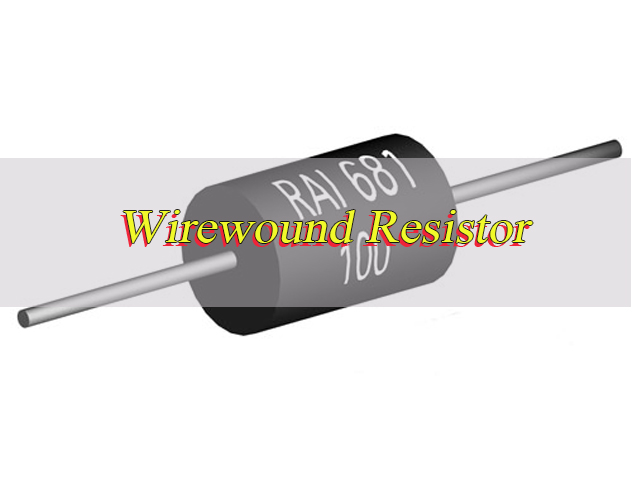
If you work with electronic circuits, you’ve likely encountered a wirewound resistor, but do you know what it is, how to identify it, or when to choose it over other resistor types like metal oxide resistors? This guide breaks down everything you need to know about wirewound resistors, from their basic definition and identification to their pros, cons, and real-world applications. It is designed to be straightforward, actionable, and packed with practical insights to help you make informed decisions for your projects.
What is a Wirewound Resistor?
A wirewound resistor is a fixed-type resistor constructed by winding a thin, high-resistivity metal alloy wire around an insulating core. The core is typically made of ceramic, porcelain, or fiberglass—materials chosen for their ability to withstand high temperatures and provide reliable electrical insulation. The metal wire, usually nichrome, manganin, or constantan, is selected for its high resistivity and low temperature coefficient, ensuring stable resistance values even in extreme operating conditions.
Unlike carbon film or metal oxide resistors, the resistance of a wirewound resistor is determined by the length, diameter, and material of the wound wire: longer or thinner wires increase resistance, while shorter or thicker wires decrease it. Wirewound resistors stand out for their high power handling capacity, low noise, and exceptional precision, making them ideal for high-power circuits, precision measurement equipment, and industrial applications where reliability is non-negotiable.
How to Identify Wire Wound Resistor?
Identifying a wirewound resistor is simple with basic visual inspection and quick checks. Here are the key indicators and steps to spot one:
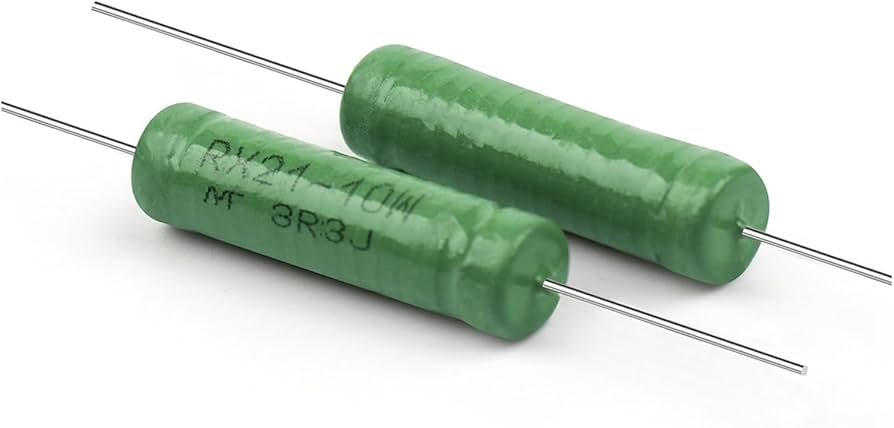
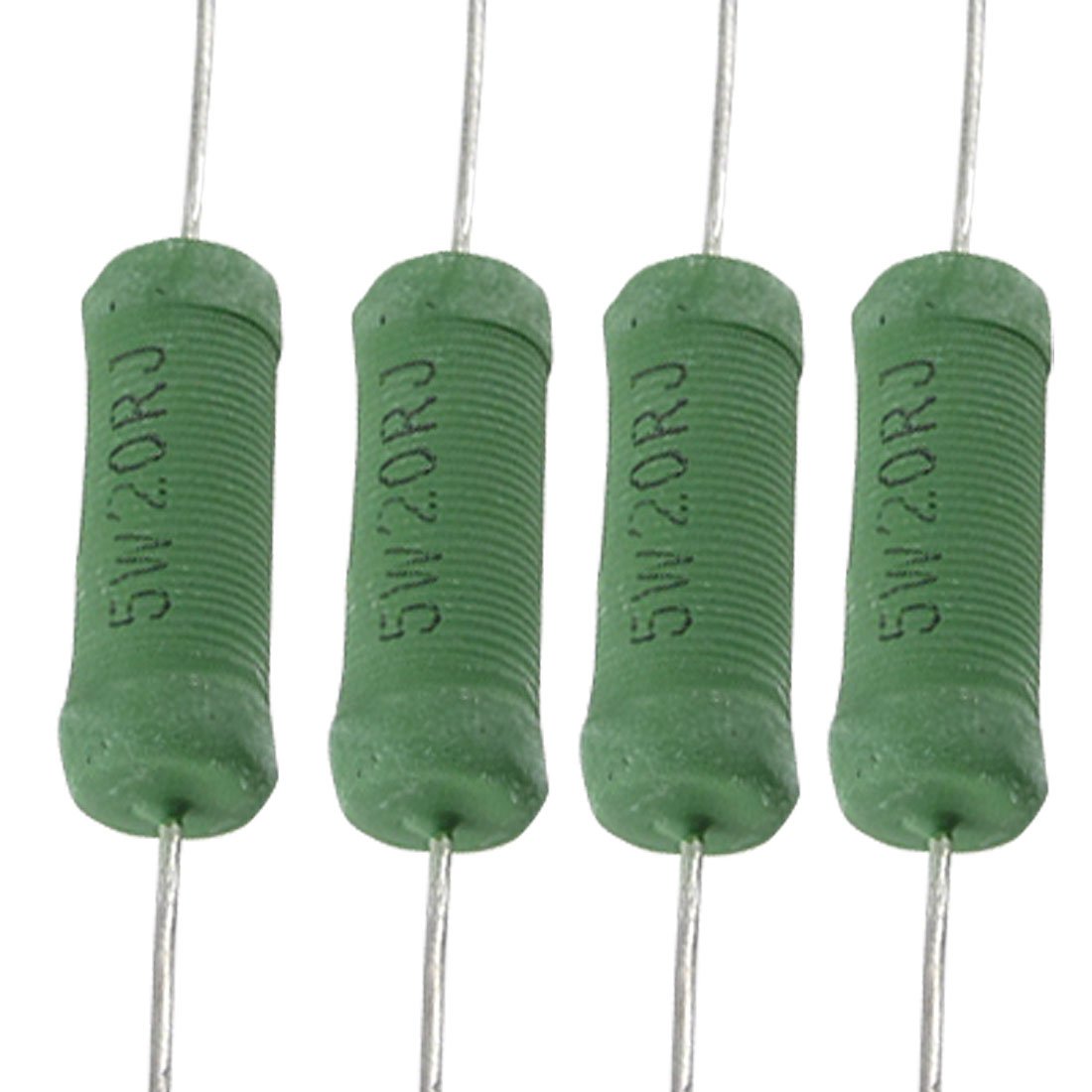
- Check the shape and core: Wirewound resistors often have a cylindrical or tubular shape with a ceramic core, covered in a protective coating—usually cement, vitreous enamel, or silicone. This coating is typically gray, brown, or green and has a smooth or slightly textured finish.
- Compare size to power rating: Unlike smaller metal oxide resistors with thin film coatings, wirewound resistors are larger relative to their power rating, a result of their winding structure.
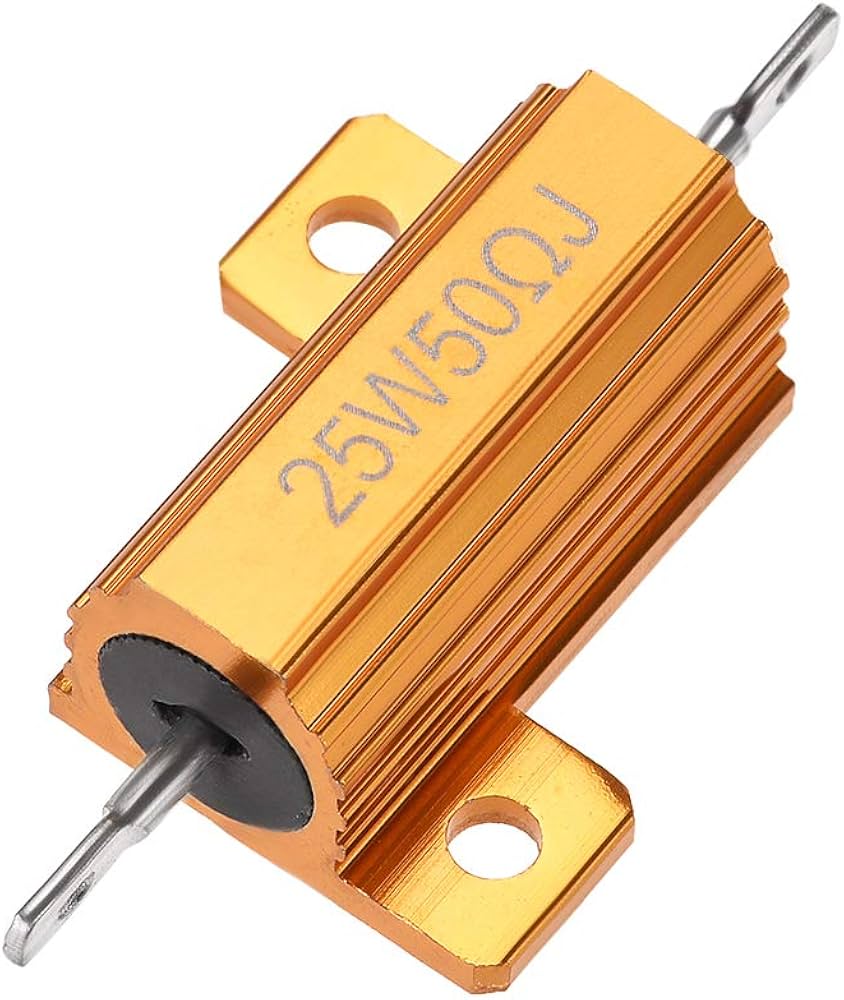
- Examine terminal design: Most wirewound resistors have axial leads (wires extending from both ends) or radial leads for surface mounting; high-power models often feature solder lugs or screw terminals.
- Look for printed markings: Wirewound resistors frequently have higher power ratings (5W or more) printed on their coating, a key clue that sets them apart from smaller, lower-power resistors.
- Verify with a multimeter: For confirmation, use a multimeter to measure resistance—wirewound resistors will display very low noise and stable readings, even with small temperature fluctuations.
What is the Wirewound Resistor Color Code?
The wirewound resistor color code follows the same standardized system used for most fixed resistors, making it easy to read resistance values without a multimeter. This system uses colored bands painted on the resistor’s body, with each color representing a specific digit, multiplier, tolerance, and sometimes temperature coefficient.
Most wirewound resistors feature 4 or 5 color bands, with slight variations in reading method between the two: for 4-band resistors, the first two bands are significant digits, the third is the multiplier (10^n), and the fourth is tolerance; for 5-band resistors, the first three are significant digits, the fourth is the multiplier, and the fifth is tolerance.
Common colors and their values include: black (0), brown (1), red (2), orange (3), yellow (4), green (5), blue (6), violet (7), gray (8), white (9). Multiplier bands include gold (0.1), silver (0.01), and no band (1), while tolerance bands are gold (±5%), silver (±10%), and brown (±1%). For example, a 4-band wirewound resistor with bands brown, black, red, gold has a resistance of 1000 ohms (1kΩ) with ±5% tolerance.
Always read the bands from the closest end to the edge of the resistor—this ensures you get the correct order of significant digits. You can also identify the correct direction by looking for gold or silver tolerance bands, which are usually the last band on the resistor.
What are the Disadvantages of Wire Wound Resistors?
While wirewound resistors offer numerous advantages, they have key drawbacks that limit their use in certain applications. Here are the main limitations:
- High parasitic inductance and capacitance: Caused by the spiral winding of the metal wire, this makes wirewound resistors unsuitable for high-frequency or radio-frequency circuits, as inductance can alter the circuit’s impedance and performance.
- Larger size and weight: Compared to metal oxide resistors of the same power rating, wirewound resistors are bulkier and heavier, making them impractical for compact electronic devices like smartphones or portable electronics.
- Higher manufacturing cost: Wirewound resistors are more expensive to produce due to their complex winding process, especially high-precision models with tight tolerances.
- Limited resistance range: While they excel at low to medium resistance values, wirewound resistors are not ideal for very high resistance applications (above 1MΩ), as the wire would need to be impractically long to achieve such high resistance.
Are Wire Wound Resistors Reliable?
Yes, wirewound resistors are among the most reliable resistors available, especially in high-power, high-temperature, and long-term applications. Their reliability stems from their robust construction: the metal alloy wire is resistant to oxidation and degradation, and the ceramic core provides excellent thermal stability.
Wirewound resistors have a low temperature coefficient, meaning their resistance value changes very little with temperature fluctuations—typically between ±5 to ±50 ppm/°C, much lower than the ±100 to ±300 ppm/°C range of metal oxide resistors. They also have a long operational life, often exceeding 15,000 hours of continuous use when operated within their rated power and temperature limits.
However, their reliability depends on proper installation and usage: Operating a wirewound resistor above its rated power will cause overheating, leading to coating damage, wire burnout, and premature failure. Regular inspection for physical damage, such as cracks in the coating or loose leads, is also essential to maintain reliability.
What is a Dual Radial Wirewound Power Resistor?
A dual radial wirewound power resistor is a specialized wirewound resistor designed for high-power applications requiring radial lead mounting. Unlike standard axial wirewound resistors, which have leads extending from both ends, dual radial models have two sets of radial leads (wires pointing in the same direction) mounted on one end of the resistor body.
This design enables easy surface mounting on printed circuit boards (PCBs) while maintaining high power handling capacity—typically between 5W and 50W. The resistor features two separate wirewound elements wound on a single ceramic core, each with its own set of leads, allowing for independent or combined use in circuits.
Dual radial wirewound power resistors are commonly used in power supplies, motor controls, and industrial equipment where space is limited and high power dissipation is required. They offer the same precision and stability as standard wirewound resistors but with the added benefit of flexible mounting and dual-element functionality.
Are Brake Resistors Wirewound?
Yes, most brake resistors are wirewound resistors, and this design is perfectly suited to the demands of brake systems. Brake resistors are used in electric vehicles, industrial motors, and other systems to dissipate excess energy generated during braking, preventing damage to the system.
Wirewound resistors are ideal for this application because they can handle high power levels—often hundreds or thousands of watts—and dissipate heat efficiently. Brake resistors are typically high-power wirewound resistors with a ceramic core and a heat-dissipating coating, such as vitreous enamel or silicone. Some brake resistors feature a corrugated winding design to increase surface area and improve heat dissipation.
For example, RX20 series brake resistors are wirewound models with a green high-temperature coating, designed to withstand temperatures up to 300°C and handle power ratings from 50W to 1000W or more. While there are other types of brake resistors, wirewound models are the most common due to their reliability and high power handling capacity.
How Should Tubular Wirewound Resistors be Mounted and Why?
Tubular wirewound resistors require specific mounting to ensure proper performance and longevity. Below are the key mounting guidelines and their underlying reasons:
- Mount vertically whenever possible: Vertical mounting creates a “chimney effect” that allows hot air to rise through the center of the resistor, pulling in cool air from the bottom. This natural convection significantly improves heat dissipation, preventing overheating and extending the resistor’s operational life.
- Use horizontal mounting if vertical is not possible: If vertical mounting is unavailable, horizontal mounting is acceptable, but you must ensure at least 10mm of clearance around the resistor to allow for adequate airflow.
- Avoid mounting near heat-sensitive components: Never mount tubular wirewound resistors directly against a heat-sensitive component or in a sealed enclosure without proper ventilation—this traps heat and causes premature failure.
- Use a heatsink for high-power models: High-power tubular wirewound resistors may require mounting to a heatsink using thermal compound, which further enhances heat dissipation, especially when operating near their maximum power rating.
How to Install a Wirewound Resistor?
Installing a wirewound resistor is straightforward, but following proper steps ensures safety and reliability. Here’s a step-by-step guide:
Check compatibility first: Verify the resistor’s rated power, voltage, and resistance to ensure it matches your circuit requirements, using a resistor with a lower power rating than needed will cause overheating.
Prepare the mounting surface: For axial lead wirewound resistors, drill holes matching the lead diameter, spaced according to the resistor’s length. For radial or surface-mount models, ensure the PCB pads are properly sized.
Secure the resistor: Insert the resistor’s leads into the holes or align them with the PCB pads, then solder the leads securely. Avoid excessive soldering heat, as this can damage the resistor’s coating or internal wire.
Fasten high-power models: For high-power wirewound resistors with screw terminals, fasten the terminals to the mounting surface using appropriate hardware, ensuring a tight connection to prevent resistance buildup.
Verify the installation: Use a multimeter to confirm the resistance value is correct, and check for proper airflow around the resistor to ensure heat dissipation. Always power off the circuit before installing or replacing a wirewound resistor to avoid electric shock.
Will a Pot Switch Act as a Wirewound Resistor?
No, a pot switch (potentiometer switch) cannot act as a wirewound resistor, even though some potentiometers are wirewound. The key difference lies in functionality: a pot switch is a mechanical device that controls current flow by opening or closing a circuit, while a wirewound resistor is a passive component that dissipates electrical energy and limits current.
A pot switch is an on/off device, while a wirewound resistor is a fixed or variable (in the case of a wirewound potentiometer) component that provides a specific resistance value. While a wirewound potentiometer contains a wirewound element, it is not the same as a pot switch—potentiometers adjust resistance, while pot switches control circuit continuity.
Using a pot switch in place of a wirewound resistor will not provide the required resistance, leading to circuit damage, overcurrent, or failure. Always use the correct component for your application: a wirewound resistor for current limiting and heat dissipation, and a pot switch for circuit control.
Is Wirewound or Metal Oxide Resistor Better?
There is no universal “better” resistor, choosing between a wirewound resistor and a metal oxide resistor depends on your circuit’s specific requirements. Below is a detailed comparison to help you decide, organized by key performance factors:
| Performance Factor | Wirewound Resistor | Metal Oxide Resistor |
| Power Handling Capacity | High (up to 50W or more); ideal for high-power circuits | Moderate (typically up to 5W); suitable for low to medium power applications |
| Precision & Tolerance | High precision; tolerance ranges from ±0.1% to ±5% | Moderate precision; tolerance ranges from ±1% to ±5% |
| Temperature Coefficient | Low (±5 to ±50 ppm/°C); stable resistance across temperature changes | Moderate (±100 to ±300 ppm/°C); more resistance drift with temperature |
| Noise Level | Very low noise; ideal for precision and audio circuits | Moderate noise; acceptable for general-purpose circuits |
| Parasitic Inductance | High (due to spiral winding); unsuitable for high-frequency circuits | Low (non-inductive design); ideal for high-frequency applications |
| Size & Weight | Larger and heavier relative to power rating | Smaller and lighter; suitable for compact devices |
| Cost | Higher cost; more expensive to manufacture | Lower cost; more cost-effective for general use |
| Best Applications | High-power circuits, precision measurement, industrial equipment, brake systems | General-purpose circuits, high-frequency applications, compact electronics |
In summary, choose a wirewound resistor for high power handling, precision, and low noise. Choose a metal oxide resistor if you need a smaller, lower-cost option for general-purpose or high-frequency circuits. Understanding these differences will help you select the right resistor for your project and ensure optimal performance.
Tags: Wire Wound Resistors, Wirewound Resistor, Wirewound Resistor Color Code, Wirewound VS Metal Oxcide Resistor
PakarPBN
A Private Blog Network (PBN) is a collection of websites that are controlled by a single individual or organization and used primarily to build backlinks to a “money site” in order to influence its ranking in search engines such as Google. The core idea behind a PBN is based on the importance of backlinks in Google’s ranking algorithm. Since Google views backlinks as signals of authority and trust, some website owners attempt to artificially create these signals through a controlled network of sites.
In a typical PBN setup, the owner acquires expired or aged domains that already have existing authority, backlinks, and history. These domains are rebuilt with new content and hosted separately, often using different IP addresses, hosting providers, themes, and ownership details to make them appear unrelated. Within the content published on these sites, links are strategically placed that point to the main website the owner wants to rank higher. By doing this, the owner attempts to pass link equity (also known as “link juice”) from the PBN sites to the target website.
The purpose of a PBN is to give the impression that the target website is naturally earning links from multiple independent sources. If done effectively, this can temporarily improve keyword rankings, increase organic visibility, and drive more traffic from search results.